I do not believe that software engineering is undergoing a tectonic shift due to large language models. I have, at this point, seen a large enough sample of code produced by the frontier of so-called artificial intelligence: it is often impressive but always incomplete. The nature of a computer program is that it does exactly what you tell it to do. Any programmer would tell you that bugs are almost never an error on the computer’s side of things, but rather of our own misrepresented instructions. This makes Claude and friends, in my eyes, practically useless: if I want something done, I want it done right. Programmers are in the business of perfection. So why is the field in crisis?
I. Preamble
Because of course, I’m not ignorant enough to suggest that there’s not something going on. I don’t think there has been a real shift in software engineering, but there has unquestionably been a shift in the vibes. Aaron Horwath recently asked why everyone in tech is sad, to much acclaim. An internet microcelebrity with whom my sister works described AI as eviscerating global decision-making. And a whole new disease has entered the modern lexicon: “AI psychosis,” a condition endorsed by even proponents of the hype to describe those who have lost all touch with reality and descended into a manic, bot-fueled internal universe.
Running parallel to this collapse of programmer self-esteem, there is the now fully-legitimized field of apocalyptic AI discourse. This of course exists alongside claims that, somehow, are also taken seriously that “the impact of superhuman AI over the next decade will… [exceed] that of the Industrial Revolution.” The global mania is fueled and “evidenced” by cyberattacks, executive orders, and a breathless news cycle.
These simultaneous phenomena are related, and they have nothing to do with the LLM craze. They have, by contrast, everything to do with the technology that ate the world: software.
II. Value
At Stanford, there is a required course called COLLEGE 101: Why College? Your Education and the Good Life. I haven’t taken it—the mandate is new and the COLLEGE program is terrible. But I hope to take advantage of its status as the cornerstone of a prestigious academic curriculum to gesture at the central importance of the concept of “the good life” to the human experience.[1] Defining and enacting a life well lived is perhaps the primary purpose of religion, child-rearing, philosophy, intellectual discourse, even popular media. Allegorical fables on the subject are our oldest inheritance.
I will refrain from descending into specifics about what I believe “the good life” to be, as I believe such conclusions to be highly individual and variable. I will, however, make the claim that any definition is defined by corporeal experience. Depending on one’s culture, the good life may involve abstract concepts—such as, for example, piety or leisure. However, these concepts must be achieved through the accumulation of concrete actions—by concerted prayer or luxurious vacationing. These things take place in the real world. To change one’s degree of good-life living, one must affect these actions in some way.
And so enters the problem of software: the good life takes place in the real world, where software exists in the so-called “digital world.” This reflexive term is bogus: there is no world to speak of except for our own, that of dirt and water and flesh. The picture we paint ourselves of a reality within machines, one made of data, is no more fanciful than a depiction composed of humans with light discs. Digital devices are inert metal boxes and digital processes are ephemeral and incoherent.[2] Software alone is thus powerless to create value, insofar as value is defined as the unit by which we approach a life well lived.[3]
III. Interlude
How can we gel this conclusion with the fact that software appears to, at least on its face, have created some value? I would contend that this is because the value has been almost entirely confined to enhancing humanity’s symbolic pursuits. Mankind’s great advantage over beast, after all, is in the organization of knowledge.[4] Over millenia, we have shaped this command over information into great material advances, such as plumbing, putting men on the moon, making Caesar salads, and building the Eiffel Tower. The software titans of our world have not done this.
Rather, software in our world works for two primary goals: efficiency and convenience. The former is the domain of the most digitized industry in the world—finance. This comprises flashy companies like Stripe who keep a ticking percentage on their website of the world’s commerce that is conducted through their platform, but also every bank and the COBOL infrastructure that replaced their paper ledgers too. Digitization lends itself naturally to finance, as its primary value is in acceptance. The fundamental difference between a sheet of paper that we say is worth $20 and the text “$20” on your screen is nothing, provided that the person you’re buying your coffee from accepts both. The transition to digital money has created value in allowing the speed of commerce to increase exponentially and the knock-on effects of such—but it’s still a pretty roundabout means of buoying the good life.
The software titans of convenience are companies like Uber and DoorDash, which have revolutionized their respective industries while at times actively detracting from people’s experience of the good life. Rather than value creation in the real world, which is out of software’s reach, these companies divert human activity to achieve their aims via a combination of on-screen instructions and digital economic rewards. This funneling of portions of the human experience that previously took place in the physical world onto their digital platforms entirely eliminates the possibility that such experiences will contribute to the good life, which as previously established can only be accomplished in our world of flesh and blood.
It is thus that software’s propensities toward efficiency and convenience work in concert with the largely digital economic system to create the illusion of value, reshaping the world in a manner which increasingly resembles Pixar’s prophecy from 2008:
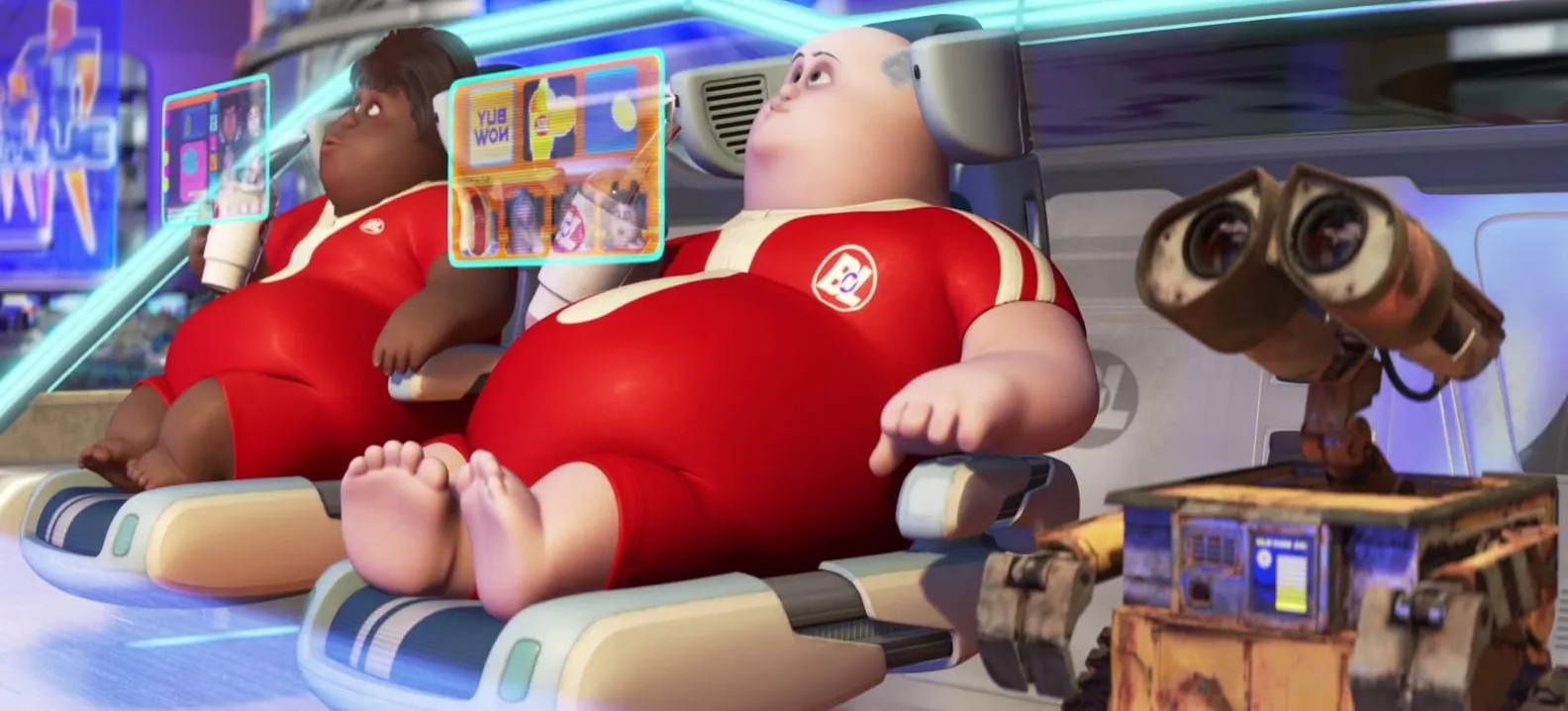
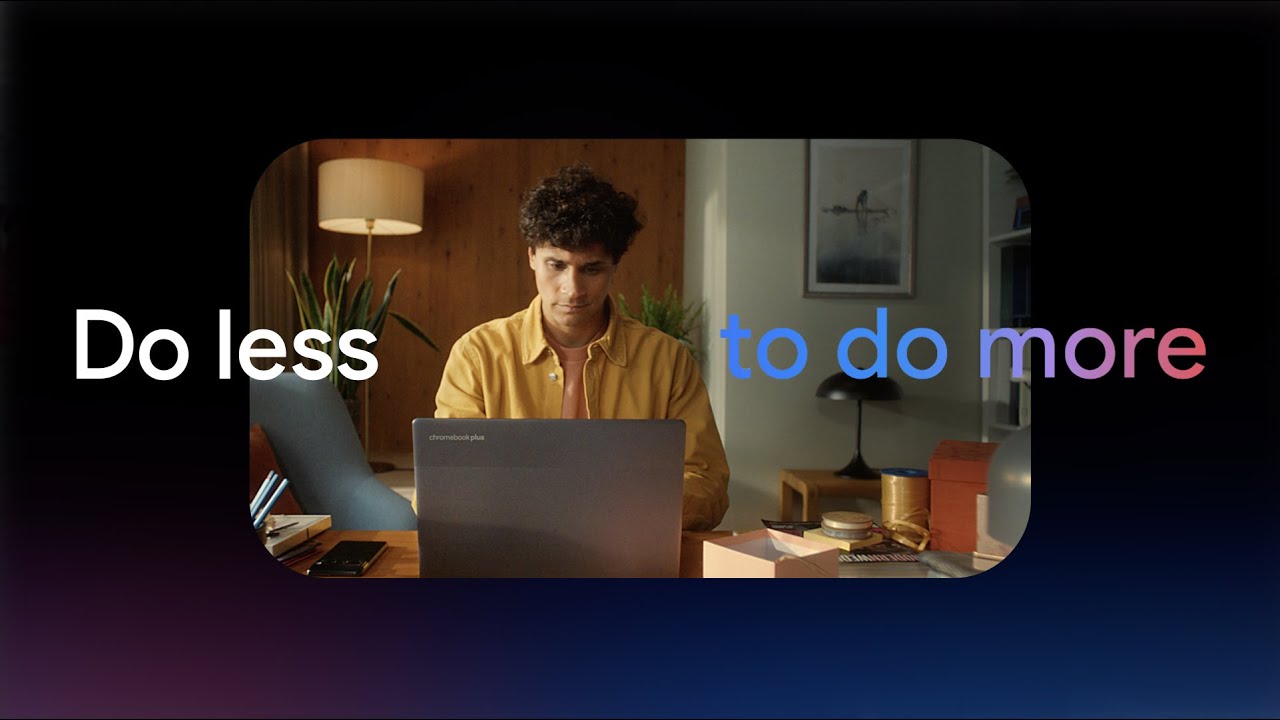
Wireheading, though, is necessarily not the good life.
IV. Trees
So then, to invert the wisdom of Itai Zvulun, why now? What has changed to engender such disillusionment in the public? Software’s inability to affect change in favor of the good life has historically been denied; has our gradual march toward software ruling every aspect of our lives simply reached a turning point, a level in which it is impossible to ignore? I think not. Rather, in this limited domain, I agree with the boosters: it’s AI.
The general public has always thought of programmers as somewhat ridiculous, but the in-group had first-hand experience and knew that their work was non-trivial. After all, at the outset of the industry, they were inventing the personal computer and putting men on the moon. In the decades since, however, software jobs have proliferated. Their technical mettle has not reduced—but their individual significance has. When computers were the size of a bus and cost millions of dollars, the only people who could afford to work on it were those being employed to solve world-historical problems. Now, you can work to solve hard problems at a company that has been feature-complete since 2012.
But complexity does not world-historical make! And with the advent of generative large language model technology, the practical challenge—the complexity—of creating middling-quality software has been significantly reduced. Thus, the experience of programmers working on such difficult but insignificant problems has significantly changed. Were they working on problems that they found inherently satisfying and intellectually stimulating, what would it matter how you get at them? Sure, the experience of using chatbot may be worse than programming yourself, much in the same way as the experience of asking a stupid person to do something is worse than just doing it yourself—but if the results furthered your pursuit of a worthy goal then surely you would be proud of the results nevertheless. This, of course, has not happened: instead, much of the software class has discovered that they were working really hard on things that don’t matter. Things that cannot affect the good life.
The remainder of the software class has doubled down on their mania: arguing that with even more and even “smarter” software, the industry will finally render true change unto the world and usher in an era of either utopian prosperity or ultimate doom.[5] As I have attempted to rigorously iterate, the great challenge with either of these predictions is that they must take place in reality, a substrate fundamentally foreign to programs. Even in manufacturing, perhaps the most automated physical industry in the world, I have seen first-hand the overwhelming amount of human intervention required to make even the most basic of products and correct even the simplest of routine mistakes. These can be startlingly stupid: for example, two pallets that have duplicate labels. From a software perspective, it is impossible to tell these apart—they are the same thing. A human could trivially recognize the error and operate on the two batches of parts as separate entities. At best, software is operating on information that barely manages to correspond to reality, whereas humans are operating in reality as a baseline. Neither vision of the end times could be realized through code.
V. Forests
These faithful, and the freshly disenchanted programmers before them, are simply the latest in a long chain of people who have suffered from a common, heretofore nameless affliction: Digital Psychosis.[6]
Digital Psychosis
noun
The belief that software in itself is capable of affecting change in the corporeal world, held either at the personal or societal level.
As outlined throughout this essay, this is not true: only by acting in concert with mechanical or organic counterparts can software make an impact in the so-called real world.[7] This limitation is fundamental to software, and attempts to circumvent it are cursed to forever be working against its nature.[8] Further, the natural tendency of software is to detract from the viscerality of the human experience.[9] This quality places it in opposition to the good life, which is universally defined as being derived from ones embodied experience.
So then, having named this delusion, how do we proceed? How can we enhance the visceral goodness of the human experience rather than detract from it? I am asking these questions both personally, as someone who writes a ton of software, and societally, in terms of where we should allocate resources and look for solutions. To that I proffer the following two-tiered system:
V.I. The Society
The means by which real change occurs in the world is worldly. That is perhaps a tautology, but what I mean to say is that we should be focused on building hardware. Mechanical innovation has been the most transformative force in human history, and today it is all that plus the interface by which we access the leverage of modern software. Critically, hardware’s tangible nature enables it to perform good-life enhancing work.[10] Charging forward on this alternative path of development would represent a strong endorsement of tangible, visceral experience and the good life. And we don’t even have to leave anyone behind: many advancements in the field of hardware, especially in recent times, have been software-enabled.
What sort of hardware should you be building? Whatever you believe may enrich and advance the human experience. A short and incomplete list, based—of course—on my own biases:
- The most important hardware device of our time actively detracts from our experience of the good life. Replace it with something that doesn’t.
- Events a world away can cause shortages and soaring prices due to the fragile and interconnected supply chain. Build the machines for local solarpunk manufacturing.
- Provide water, food, energy, and medicine to the billions around the world who need it and don’t have it. Avoid the mistakes of the past.
- Bring people together face-to-face. Not virtually: literally.
- Explore the unknown. Boldly go where no man has gone before.
The good life is complex and multifaceted: there is no shortage of problems. Go seek one out and viscerally elevate people’s lives.
V.II. The Individual
Each individual should pursue what moves them. Live your good life fully; no societal restructuring will make people more fulfilled if it doesn’t allow them to pursue their own convictions. If coding late into the evening brings you visceral joy and is among your profound skills, I wish you to pursue it with all your heart, and this screed be damned. If soccer does the same, never the leave the pitch. If it’s hardware, then I truly hope you join the effort to remake our world into one in which the human experience is restored to a position of primacy.
VI. Coda
Recall that life is lived outside the machines. It is upon you to live it. Here’s to a societal Jerusalem, built quickly and in our days.
Many thanks to Jacob Neplokh and Ben Fischer for reviewing drafts of this post.
Coincidentally, my little sister has just started college at a separate elite West Coast institution and is taking a course entitled Labor and the Good Life. ↩
By which I mean two things: first, a platform like Instagram is truly composed of countless short-lived processes. These perform disparate tasks for fractions of a second—encrypting bytes, querying databases, etc.—before passing off those results to other processes in turn. Second, there is no shared fabric composing a distinct internet, but rather a hodgepodge of computers that are only occasionally and delicately connected. Every point of data interconnect must be painstakingly designed and implemented or else it will break (which happens routinely). The digital dance only appears coherent at a distance: to be truly red-pilled, investigate the technical process of logging in. ↩
Be that concerted worship or piña coladas, as previously discussed. ↩
Or, uh, tools, or a divine mandate, or something. ↩
Hard to say which, of course, but they’re feeling lucky. ↩
Which I have purposely named distinctly from its fictional counterpart, cyberpsychosis. William Gibson’s universe may be a dystopia and not my personal image of the good life, but at least it’s more interesting than what we have going on. ↩
One could make a compelling argument that America’s focus on software while the rest of the world continued to slowly develop in hardware capabilities is what has led to the precarity of American Empire and the rise of a multipolar world order. I will defer this essay for another time. ↩
This does not mean that they won’t be successful, but it does mean that I predict such leaps to be limited in scope. Artificial life will not come from software. ↩
A quality that is made all the more extreme due to the interfaces we have devised for interacting with it, namely large glowing glass panels. ↩
Returning to our example good life scenarios: a monastery is a form of hardware which enables concerted prayer by providing shelter, isolation, and beautiful architecture to enhance contemplation, whereas a piña colada machine is a form of hardware which enables a great tropical vacation by providing you with a delectable coconut-pinapple-rum concoction. ↩